Suffer on Centennial
- When
- Saturday, 29 May 2027
- Where
- West Hawk Lake, MB
- Distances
- 100km · 100km Relay · 50km · 25km · 8km
Race day: Saturday, 29 May 2027
191 days to go.
- First start
- 6am (100km)
- Entry
- $95 to $690
- Getting there
- Parking & transport
About this event
Suffer on Centennial is a multi-distance trail ultra in Whiteshell Provincial Park, Manitoba. From a family-friendly 8 km loop to a rugged 100 km ultra, runners experience technical boreal forest terrain, granite ridges and stunning lake views.
- Terrain
- Trail
- Difficulty
- Challenging
- Good for beginners
- Yes – the 8 km route is family-friendly, but longer distances are demanding
Events & entry fees
Save the ones you’re doing to My races. Free with a RacesCanada account.
Saturday 29 May
-
100km6am$275
-
100km Relay6am$690
-
50km8am$175
-
25km10am$140
-
8km11am$95
Entry fees as listed on 17 Nov 2026. Prices often rise after early bird, so check the entry page for today's price.
Event details
The course
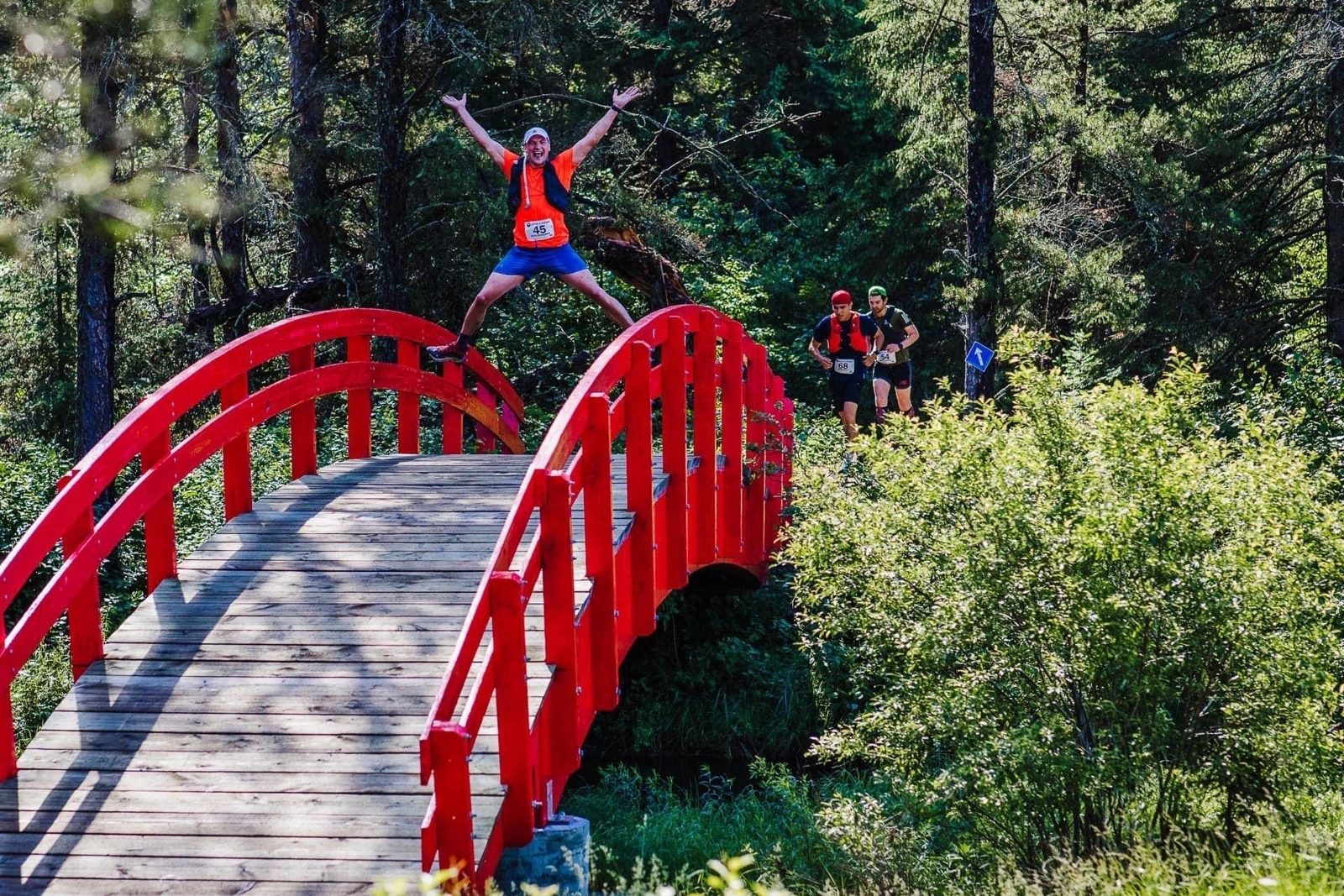
The race traverses classic Canadian Shield terrain in Whiteshell Provincial Park. The 100 km point-to-point course starts at Alfred Hole parking lot and weaves through single-track, root-laden forest, exposed granite ridges, and the iconic Red Bridge at Hanson's Creek. Aid stations appear roughly every 16–20 km and feature water, nutrition, and crew access (except the first station). The 50 km follows the same route from the halfway point. The 25 km is a two-lap loop featuring the Five of Diamonds technical section and Pierre's Poetry. The 8 km loop offers a taste of the rugged trail with rocks, roots and short climbs, but no aid stations.
Getting there
Suffer on Centennial is held in Whiteshell Provincial Park near West Hawk Lake. Start/finish areas are at Alfred Hole, McGillivray Falls and Falcon Trails parking lots. Parking is available at each lot; shuttle options are offered for 100 km and 50 km participants (additional fee). For detailed directions, transport options and parking fees, please visit the official race website.
Weather and what to pack
Typical May weather at West Hawk Lake brings a daytime high of around 16 °C and an overnight low near 6 °C, with a good chance of showers as the month averages about 87 mm of precipitation. Runners can expect cool, damp start-line conditions that warm slightly as the race progresses. Dress in moisture-wicking base layers, a light waterproof jacket and a hat or headband, and keep a pair of gloves handy for the early kilometres. Carry water and electrolytes, as even mild temperatures can lead to dehydration.
Race details last updated 18 Nov 2026

Ready to run Suffer on Centennial?
Official WebsiteQuestions
When does registration open and how much does it cost?
Registration opens on 2027-01-01 at 08:00 AM. Early-bird entry fees are $95 (8 km), $140 (25 km), $175 (50 km), $275 (100 km) and $690 for a 6-person 100 km relay team. Prices include tax and service fees.
What time do the races start and where do I pick up my bib?
The 100 km/Relay starts at 06:00 AM from Alfred Hole Parking Lot, the 50 km at 08:00 AM from McGillivray Falls Parking Lot, the 25 km at 10:00 AM and the 8 km at 11:00 AM, both from Falcon Trails Parking Lot. Bibs are available the day before (May 28) at the respective parking lots; see the schedule on the website.
What gear is mandatory for the 100 km and relay races?
Runners must carry at least 1.5 L of fluid (2 L recommended if hot), 400 kcal of nutrition, a fully filled hydration system, a waterproof jacket, and a buff or toque. All 100 km and relay participants must also carry a cellphone with data turned on. Additional gear requirements may change with the forecast.
Are there aid stations and can my crew assist me?
Aid stations are stocked with drinks, gels, food and pit toilets. Crew may only assist at aid stations that have crew access (e.g., Bear Lake, McGillivray Falls, Toniata, Falcon Trails). Powerline Aid Station 1 is a drop-off only with no crew access. No external support is allowed outside these zones.
What if I need to withdraw from the race?
If you decide to quit, you must do so at an aid station and inform the volunteers. This ensures accurate participant counts and prevents unnecessary search-and-rescue actions.